Views: 0 Author: Site Editor Publish Time: 2026-05-25 Origin: Site
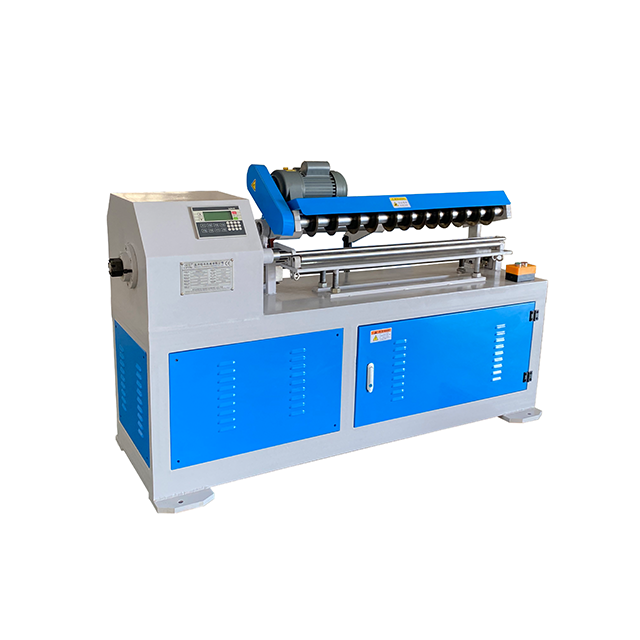
Scaling paper core and tube production exposes the critical flaws of manual or semi-automatic cutting. You quickly notice inconsistent lengths, crushed edges, and escalating labor demands disrupting your workflow. Cardboard is deceptively difficult to process at scale. The silicates present in paper board act as a harsh abrasive, rapidly dulling standard blades. At the same time, circular profiles are highly prone to spinning or collapsing under pressure. Upgrading to a compact Automatic Carboard Tube Cutter resolves these persistent bottlenecks immediately. By automating the feeding, clamping, and cutting processes, facilities achieve remarkably tight tolerances. They secure high throughput without requiring massive floor space. You will discover how automated equipment eliminates crushing and mitigates blade wear. We will explore the mechanics behind micro-precision cutting systems. Finally, you will learn how to properly evaluate equipment manufacturers to find the perfect machinery for your specific industrial application.
Precision & Yield: Automated systems maintain strict tolerances (often ±0.1mm), eliminating rework and material waste.
Application-Specific Configurations: Machine selection depends heavily on wall thickness (circular blades for <5mm vs. toothed blades for >5mm) and end-use (textile cores vs. heavy-duty industrial).
Operational Safety: Enclosed automated cutting eliminates the severe operator risks associated with manual saws catching and spinning cylindrical materials.
Maintenance Realities: Look for equipment that mitigates silicate-induced blade wear through auto-rotating blades or replaceable nylon anvils.
Entry-level tools like hacksaws or miter saws seem viable initially. However, these manual methods fail dramatically as your production scales. Operators struggle to maintain speed during long shifts. They also lose the ability to guarantee straight, flush cuts across hundreds of cycles. Inconsistent lengths quickly lead to downstream packaging issues. Watch out for hidden material waste. When operators manually cut a 120-inch master core down to smaller pieces, slight deviations multiply. A one-millimeter error on the first cut cascades down the line. By the final piece, you might lose an entire usable segment. This compounds material costs silently over a fiscal quarter.
The physics of cutting cylinders creates a severe safety hazard. High-speed manual saws easily catch on the exterior of cardboard tubes. This interaction causes dangerous rotational spin. The blade binds inside the flexible core. It violently pulls the material out of the operator's hands. These accidents cause severe injuries and halt production lines. Furthermore, the physical strain on operators using manual pull saws leads to fatigue. Fatigue directly correlates with increased workplace safety incidents.
Improper clamping mechanisms in cheap machines add another layer of failure. Budget equipment often squeezes flexible cores too tightly. This aggressive action deforms the circular profile. Flattened tubes cannot fit onto processing spindles. This single flaw leads to entirely rejected batches and wasted material.
Blade degradation poses the final structural hurdle. Cardboard contains abrasive silicates. These sand-like microscopic particles naturally occur in paper pulp. They act as grinding agents against metal. They rapidly destroy standard steel blades. Dull tools then tear the paper board, leaving jagged edges and unacceptable burrs.
Modern manufacturing demands solutions maximizing output while minimizing required floor space. A compact automated system perfectly balances this operational concept. It transforms a hazardous chore into a highly predictable, metric-driven operation. You gain factory-floor real estate without sacrificing high-end performance capabilities.
Throughput benchmarks demonstrate this massive shift in efficiency. A reliable Automatic Carboard Tube Cutter routinely achieves 100 to 300 cuts per minute. This incredible volume outpaces manual labor by five to ten times. You secure continuous output without adding expensive extra shifts. This metric directly impacts your daily shipment volumes.
Material handling innovations drive these impressive speed metrics safely. Modern compact units utilize tractor-belt feeding systems. These advanced belts apply pre-loaded tension around the circumference of the tube. They prevent slippage entirely during high-speed transit. More importantly, they distribute clamping force evenly to prevent core crushing. Best practices suggest connecting your cutter directly to downstream packaging lines. When the machine automatically kicks out finished cores, conveyors can transport them directly to the rewinder. This seamless integration eliminates intermediate palletizing steps. It drastically reduces forklift traffic on the production floor.
Micro-precision controls lock in your desired production parameters. Operators now rely on touchscreen programmable logic controllers (HMI). They simply input the exact cut lengths required for the specific job. The machine then maintains a strict ±0.1mm tolerance for continuous, uninterrupted runs. This precision eliminates material waste entirely. Touchscreen programming also saves distinct job recipes. If you switch from processing two-inch cores to four-inch cores, the operator simply taps the saved profile. The machine adjusts its internal parameters instantly.
Selecting the correct mechanical setup determines your ultimate production success. Buyers must evaluate equipment based on their specific product lines. You need a reliable framework to match machine capabilities to actual material demands. A wrong choice leads to constant jamming.
We categorize solutions primarily by cutting physicality.
Circular Blades: These work best for thin-wall tubes under 5mm thick. They slice cleanly and fast. The rolling action prevents the cardboard from crushing. They leave a perfectly smooth edge.
Toothed or Saw Blades: You require these for thick-wall or heavy-duty tubes exceeding 5mm. They provide the sheer cutting force necessary for dense paper board. They effectively chew through heavily glued layers.
Laser Cutting: This offers high-precision, zero-contact processing. It easily cuts complex shapes. However, it involves a significantly higher capital expenditure upfront.
We must also classify machines by their head configurations. Different setups serve completely different end-use markets. Our comparison chart breaks down the standard industrial configurations.
Machine Configuration | Optimal Use Case | Common End Products |
|---|---|---|
Dual-Head Machines | Small inner-diameter processing | Textile yarn tubes, plastic wrap cores |
Multi-Blade Machines | High-volume, short-length cutting | Toilet paper cores, small packaging cans |
Four-Head CNC Machines | Heavy industrial applications | Tape, film, and papermaking cores |
Review these functional categories against your daily production run. You will quickly identify the right structural fit for your facility. Common mistakes happen when facilities try to stretch a machine's capabilities. For example, using a circular blade on a heavy-duty 10mm wall thickness will inevitably stall the motor. It forces the blade to deflect, creating a slanted cut. Always adhere to the 5mm threshold rule for circular tools. Additionally, note that laser systems require significant fume extraction infrastructure. Burning paper releases dense smoke requiring ventilation according to environmental health standards.
Tooling consumables represent the highest ongoing operating expense in tube processing. Facilities must manage blade wear aggressively to maintain profit margins. You cannot simply install a machine and ignore the underlying maintenance realities. Proactive maintenance separates efficient factories from struggling ones.
To mitigate abrasive silicate wear, evaluate the specific blade technology carefully. We highly recommend prioritizing machines featuring auto-rotating blades. This specialized function slightly turns the blade after each cycle. It distributes wear evenly across the entire cutting edge. Alternatively, you should source premium tungsten carbide tooling. Carbide resists abrasion far better than standard carbon steel.
Anvil and backing preservation also require your careful attention. When a blade fully penetrates the cardboard, it must strike a backing surface.
Evaluate the anvil material: Demand systems utilizing mixed steel and nylon anvils.
Protect the blade: The nylon cutting mat absorbs the final aggressive strike.
Extend longevity: This combination prevents metal-on-metal collisions during full-penetration cuts.
We advise creating a standardized tooling inspection schedule. Operators should visually check the anvil and blade condition before every single shift. Catching a worn nylon mat early prevents damage to the expensive steel blade. Another best practice involves keeping three sets of blades in your inventory at all times. One runs on the machine, one stays in the tool crib as a backup, and one goes out for professional sharpening. This rotation ensures you never face unexpected downtime due to dull edges.
Finally, focus on downtime reduction during necessary maintenance intervals. Blades will eventually dull despite your best efforts. When they do, changeovers should not disrupt your entire shift. Advise your procurement team to prioritize machines incorporating tool-less blade replacement systems. Operators can swap dull edges in under a few minutes. They return the line to full capacity immediately.
Differentiating reliable vendors from generic equipment assemblers requires a strict vetting process. You need partners who deeply understand industrial packaging demands. Follow these three non-negotiable criteria when shortlisting your options. Doing so prevents costly procurement mistakes.
First, demand a rigorous proof of concept through trial cutting. Never buy industrial machinery based on glossy spec sheets alone. A reputable Automatic Carboard Tube Cutter manufacturer will eagerly request actual material samples. They require you to send your physical paper cores to their testing facility. They will run tests to verify cut quality, exact clamping pressure, and operational speed. They should return the cut samples along with uncut video proof.
Second, insist on absolute component transparency before signing contracts. Ensure the manufacturer builds equipment using standardized, globally available OEM parts. Check the exact brands of their motors, PLCs, and pneumatics. When evaluating their PLC systems, look for globally recognized brands. Standardizing on common electrical architectures means your in-house maintenance team can easily troubleshoot errors. Proprietary software forces you to rely exclusively on the manufacturer for technical support. This critical step prevents supply chain lock-in. If a sudden breakdown occurs, you can source replacement parts locally. You avoid waiting weeks for international shipping.
Third, verify all safety and compliance measures comprehensively. Industrial equipment must protect your workforce above all else. Verify the inclusion of essential factory safeguards. The machine must feature Lexan safety shields covering all moving components. It needs easily accessible, highly visible emergency stops. Review their safety documentation closely. Ask for the specific risk assessment reports. Proper industrial machinery should feature safety interlocks. If an operator opens the Lexan shield during a run, the machine must cut power to the drive motors instantly. Furthermore, confirm the unit complies fully with your local machinery directives.
Upgrading your production floor with dedicated core processing technology removes critical manufacturing bottlenecks. It replaces hazardous manual labor with a highly predictable, high-margin operation. You gain complete control over your material yields and production timelines.
Take these immediate next steps to optimize your facility:
Audit your current production lines to calculate exact scrap rates.
Document your weekly blade replacement expenses and maintenance labor hours.
Identify the average wall thickness and required cut lengths for your most profitable products.
Match those specific material properties against dual-head or multi-blade configurations.
Contact shortlisted vendors to request a documented cycle-time test using your exact cardboard materials.
Review the video proof provided by the manufacturer before committing to capital expenditures.
A: Tube cutters are typically handheld or benchtop tools for manual, low-volume, sub-12-inch jobs. Tube cutting machines are motor-driven, automated systems with programmable feeds designed for continuous industrial scaling.
A: Rarely in the same machine. Thin cores require different clamping and blade types (circular) compared to heavy-duty industrial cores, which require aggressive toothed blades and heavy torque.
A: Advanced machines utilize multi-point rotational cutting, where the blade or tube rotates. They pair this with adjustable tractor-belt feeding to distribute pressure evenly. This ensures the structural integrity of the tube remains completely intact.