Views: 0 Author: Site Editor Publish Time: 2026-05-08 Origin: Site
Converting jumbo parent rolls into market-ready dimensions is a critical bottleneck in the paper converting industry. It dictates both production efficiency and final product quality. A standard converting machine does much more than simply cut paper into smaller pieces. It manages web tension dynamically, prevents catastrophic edge defects, and guarantees downstream equipment compatibility. Modern packaging lines demand absolute precision from their input reels. Without precise mechanical control over the web, plant managers face excessive material waste, machine jamming, and completely rejected shipments.
This comprehensive guide breaks down the core mechanics, configuration options, and essential evaluation criteria available today. You will learn exactly how to select modern machinery to match specific substrate requirements. We also outline how you can confidently avoid over-specifying unnecessary features. A high-performance Paper Slitter Rewinder establishes harmony across the production floor, ensuring you maximize throughput without sacrificing dimensional accuracy.
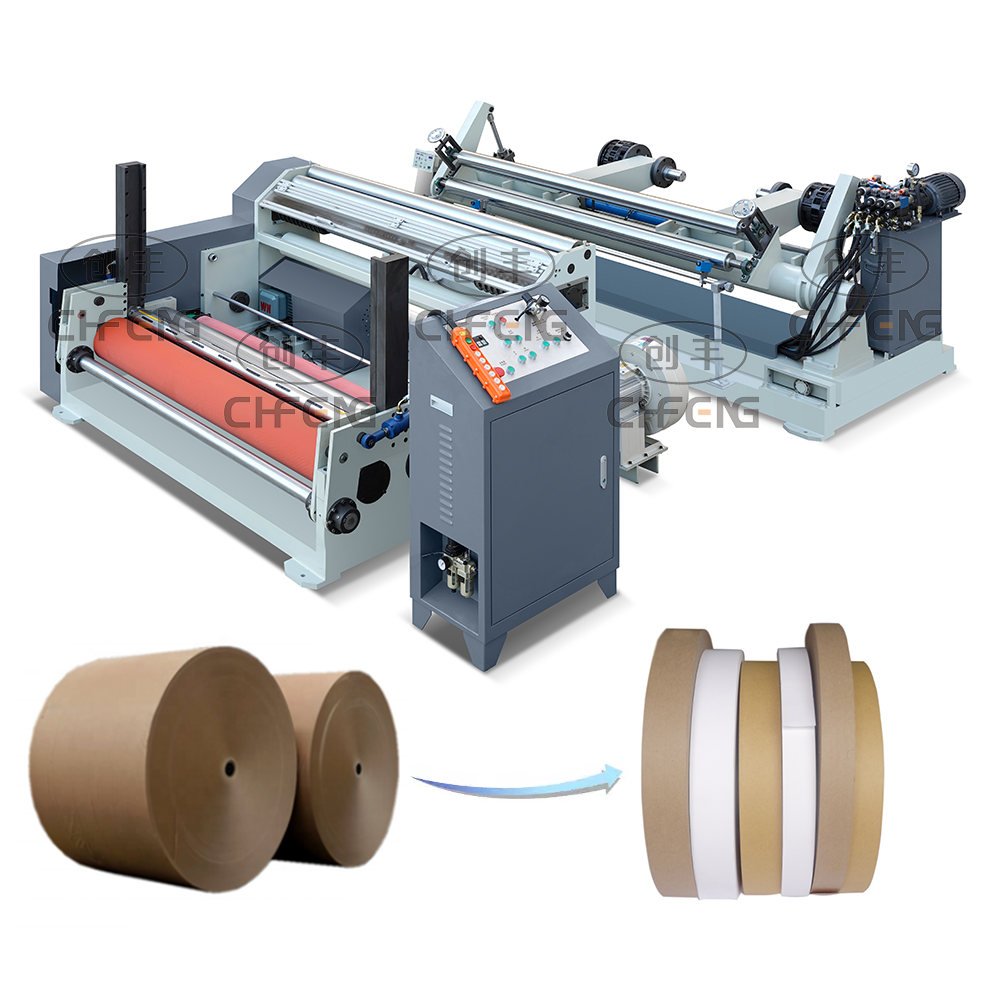
The process relies on three synchronized modules: unwinding (tension initialization), slitting (precision separation), and rewinding (roll density formation).
Blade selection is substrate-dependent; heavy-duty shear cutting is mandatory for thick kraft paper, while delicate materials require specialized handling.
Application-specific equipment—such as a Paper Straw Paper Slitter or Paper Tube Paper Slitter—demands customized tension control to prevent structural defects like telescoping.
A slitter rewinder is not universally required; if the sole objective is reducing roll width without altering the core, direct roll-cutting (band saws) may offer higher ROI.
Inconsistent throughput often plagues manufacturing environments. Material waste usually stems from a sheer lack of synchronization between primary mechanical modules. If the unwind tension fights the rewind torque, web breaks occur instantly. The entire operation relies on establishing perfect harmony across three distinct processing zones. Let us examine how each stage contributes to the final reel quality.
The web introduction phase happens at the unwind station. This robust framework handles massive jumbo parent rolls. These master reels frequently exceed 3,000 lbs in modern paper mills. The station relies heavily on automated web guiding systems. Ultrasonic or optical edge sensors continuously scan the material flow. They communicate directly with pneumatic lateral shift mechanisms. These mechanisms instantly correct microscopic misalignments before the paper ever reaches the cutting blades. Furthermore, sophisticated braking systems—either pneumatic or magnetic particle brakes—apply the exact resistance needed to keep the web taut.
Next, the material enters the conversion zone. This slitting section represents the critical juncture for product separation. Precision directly determines whether the output remains viable for secondary printing or packaging processes. Even minor blade flutter causes ruined edges. Operators must carefully manage the web path angle as it passes through the rotary knives. Proper geometry prevents the material from tearing or stretching prematurely.
Finally, the web arrives at the rewind station for roll formation. This module re-establishes necessary roll density. High-quality machines utilize sophisticated web spreaders, commonly known as bowed rolls. They sit just before the rewinding shafts. These engineered rollers physically flatten the web out from the center to eliminate microscopic wrinkles. They permanently prevent overlapping edges during final reel formation. Creating a perfect "nip point" where the web meets the winding drum is absolutely essential for excluding trapped air.
Matching blade types to material physical properties remains strictly non-negotiable. An incorrect choice leads directly to edge dust generation. Operators will experience frequent web breaks or premature blade wear. You must evaluate the tensile strength, thickness, and abrasiveness of your specific material before selecting a cutting mechanism.
Shear cutting utilizes rotary blades and represents the ultimate industry standard for paper products. It uses male and female rotating knives mimicking a continuous scissor-like action. Manufacturers typically set the bottom blade to run slightly faster than the web speed. This over-speed effect pulls the material cleanly through the cut. They are best suited for heavy, rigid materials like kraft paper and linerboard. This method produces zero dust and highly accurate edges.
Score cutting, or crush cutting, presses a dull circular blade against a hardened steel anvil cylinder. It works incredibly well for non-wovens or sticky adhesives. Experts generally avoid it for standard paper conversion. The extreme localized pressure brings a very high risk of generating unacceptable particulate dust. Dust severely contaminates clean room environments and ruins subsequent printing operations.
Razor slitting provides a highly economical alternative. However, manufacturers primarily reserve it for thin plastic films. We do not recommend stationary or oscillating razor blades for abrasive paper products. Abrasive wood fibers cause extremely rapid blade degradation. When blades dull rapidly, you experience constant machine downtime for replacements.
When you evaluate consumables and durability, look specifically for 100% tungsten carbide metallurgy in shear blades. Tungsten carbide minimizes costly maintenance downtime. It ensures remarkable long-term edge retention compared to standard hardened steel.
Let us look at a basic technical comparison chart for these common industrial cutting methods.
Slitting Method | Primary Mechanism | Ideal Substrates | Paper Suitability |
|---|---|---|---|
Shear Cutting | Interlocking rotary knives | Kraft, Linerboard, Fine Paper | Excellent (Zero Dust) |
Score / Crush Cutting | Dull blade pressed on anvil | Non-wovens, Adhesives | Poor (High Dust Risk) |
Razor Slitting | Stationary or oscillating razor | Thin Plastic Films, Foils | Poor (Rapid Wear) |
Finished roll hardness serves as your primary success metric. Incorrect rewinding tension practically guarantees crushed cores. It also causes "telescoping" during downstream transit. Telescoping occurs when inner layers of the roll slide outward, resembling an extended pirate spyglass. Once a roll telescopes, palletizing becomes entirely impossible. To achieve perfect results, you must choose the proper winding drive setup. Engineers rely heavily on taper tension profiles to build a solid foundation at the core while slightly relaxing tension as the diameter grows.
Center Winding: Torque applies directly through the core shaft itself. The machine motor drives the expanding mandrel holding the cardboard core. This configuration remains ideal for producing firm, tight rolls of rigid materials. The main risk involves crushing soft paper cores if engineers miscalculate the torque profile.
Surface Winding: The system drives the web using friction from external pressure rollers pressing against the outer diameter of the building roll. It imposes minimal internal tension stress on the actual web. It is absolutely best suited for delicate, easily stretched substrates. Typical examples include facial tissue or lightweight coated papers.
Turret (Continuous) Rewinders: These advanced machines feature multiple rotating winding shafts mounted on a central indexing hub. This represents a massive scalability factor. It allows operators to safely unload finished rolls while new rolls are actively being wound on the opposite side. This automated indexing feature drastically reduces changeover downtime in demanding high-volume environments.
Standard commodity machines often fail spectacularly in specialty markets. When tasked with narrow-web or high-tolerance outputs, they simply lack the necessary precision. Specialized converters demand customized engineering profiles to succeed. Running commodity machinery for niche applications usually results in severe web wandering and inconsistent reel profiles.
A Paper Tube Paper Slitter processes heavy core-board and thick kraft materials. These demanding substrates require machines built with heavily reinforced, vibration-resistant frames. You need high-torque center winding drives and heavy-duty shear knives. The tension required to slice through dense board creates immense physical stress on the machine frame. They must seamlessly produce the densely wound reels entirely necessary for downstream automated tube winding machines. If the slit reels lack sufficient hardness, the subsequent tube making process will collapse inward.
Conversely, a Paper Straw Paper Slitter handles completely different operational parameters. The machine requires ultra-narrow slitting capabilities, often processing widths under 15mm. Flawless edge profiles are completely mandatory to ensure completely food-safe adhesive application during straw forming. Frayed edges lead to structural failure when the consumer places the straw in liquid. This application inherently demands sanitary dust-extraction modules to meet strict FDA or CE hygiene requirements. Highly sensitive dancer-roller tension control is also required to carefully handle lightweight specialty papers without accidental snapping.
Thermal and Point-of-Sale (POS) applications also require specialized attention. Machines processing lottery tickets or receipt paper must incorporate rigorous static elimination bars. Friction naturally generates massive static charges on dry paper. They need extremely delicate anti-scratch web handling pathways. These smooth idler rollers protect highly sensitive chemical coatings from accidental heat activation or dark cosmetic damage.
Purchasing advanced machinery involves balancing realistic factory capabilities against theoretical catalog features. Over-specifying automation brings hidden operational dangers. Manufacturers must carefully evaluate their internal maintenance capacities before committing to highly complex robotic workflows.
Implementation Considerations: Fully robotic core loading sounds exceptional on paper. It eliminates manual lifting and speeds up changeovers. However, it can easily create massive maintenance bottlenecks if your facility lacks specialized in-house technicians. High-tech pneumatic sensors fail occasionally. When they do, production completely stops unless staff can quickly recalibrate them. Simple, semi-automatic features often provide much higher reliability for mid-sized plants.
Defect Prevention: Focus your capital investments on practical closed-loop tension control systems. Prioritize inline optical inspection cameras. Catching gauge bands, material bridging, or faint wrinkling before the roll finishes saves thousands of dollars in rejected material. Quality control must happen in real-time. Do not wait for manual inspection after the reel hits the pallet.
Facility Readiness: Always assess your floor space logistics early. Ensure your factory pneumatic lines and electrical infrastructure can genuinely support the new equipment requirements. Proper air pressure remains vital for expanding friction shafts and engaging shear knives. Material handling protocols matter greatly. Verify your overhead cranes or specialized forklifts are genuinely adequate for safely loading multi-ton parent rolls into the unwind station.
Evaluation dimensions matter immensely before signing any equipment purchase order. Remember exactly what this machinery actually does. It is explicitly built to change both material width and length simultaneously. It changes core sizes too, allowing you to convert massive mill rolls into consumer-friendly retail sizes.
If your sole operational goal is strictly reducing the width of a master roll, you might not actually need one. Imagine needing to cut a massive 150-inch roll into five smaller 30-inch rolls for a regional printing press. You do not actually need to unwind it first. In this specific scenario, a direct roll-cutting machine like a band saw or circular saw remains vastly superior. Direct cutting bypasses complex rotary blade setups entirely. An industrial band saw can successfully process a 1.3-meter diameter master roll in roughly 5 to 10 minutes. Threading a web through a complex slitter pathway takes considerable time by comparison.
Take immediate next-step actions today. Audit your exact converting production requirements. Do you need to continually inspect the unwinding web for hidden mill defects? Must you change the internal core diameters for different customer orders? Do you frequently run multiple ultra-narrow reels for products like straws or POS tape? If you answered yes to any of these questions, immediately short-list a dedicated slitter rewinder. Otherwise, you should carefully explore direct-cutting alternatives to maximize your return on operational floor space and capital investment.
Sourcing the correct machinery requires completely moving beyond baseline operational speed metrics. You must thoroughly evaluate actual substrate compatibility. Blade metallurgy determines long-term profitability and limits maintenance shutdowns. Precise tension control ensures your specific product avoids catastrophic internal crushing or unsightly telescoping during transit.
Before finalizing your binding equipment specifications, demand verifiable proof. Require the equipment manufacturer to run comprehensive test conversions. Use your exact specific jumbo roll grades during these factory trials. This critical step accurately validates clean edge quality. It definitively proves the machine achieves your required roll hardness parameters. Taking this proactive step eliminates costly post-installation surprises and secures your production efficiency for years to come.
A: A standard paper winder primarily splices torn webs or simply alters the outer roll diameter without changing the width. A slitter rewinder includes a highly specialized cutting module. Manufacturers specifically design it to change the exact width of the material, splitting it into multiple narrower market-ready reels.
A: It dynamically utilizes highly sensitive load cells or mechanical dancer rollers. They constantly read the web tautness. The centralized computer dynamically adjusts braking torque as the rewinding roll diameter steadily increases. This continuous adjustment ensures uniform internal stress from the inner core to the final outer layer.
A: While technically possible using advanced hybrid center-surface drives, it is highly impractical. The two materials have completely distinct blade requirements. They require opposing torque profiles and massively different web handling tolerances. These extreme operational differences typically necessitate purchasing dedicated, purpose-built machinery for each distinct material type.